
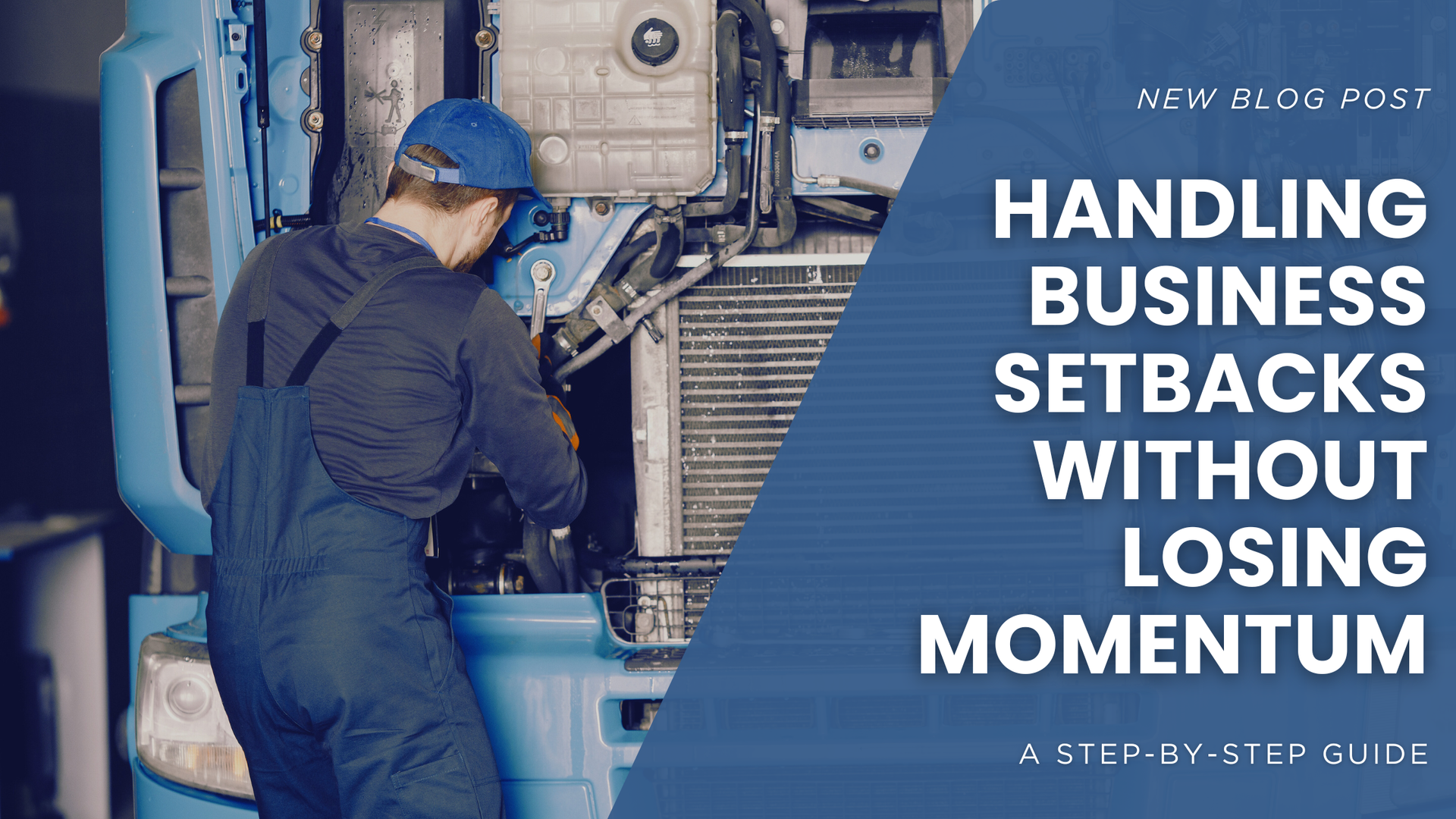
Running a business isn’t always a straight road.
Unexpected challenges — from equipment breakdowns and cash flow issues to losing a client or facing regulatory hurdles — can throw even the most organized business owner off track.
The key isn’t to avoid setbacks, but to handle them in a way that keeps your business moving forward.
Here’s a step-by-step approach to handling setbacks without losing momentum:
Step 1: Accept the setback without panicking
Take a deep breath and resist the urge to overreact.
Feeling frustrated or anxious is normal, but dwelling on the situation wastes time and energy that could be spent on solutions.
Focus on what you can control and identify the areas that require immediate attention.
Key points to keep in mind:
- Stay calm and acknowledge your emotions without letting them take over.
- Clearly identify what went wrong and which resources are affected.
- Focus on solutions rather than ruminating on problems.
Step 2: Break the problem into manageable steps
Large challenges can feel overwhelming, but breaking them down into smaller, actionable steps makes them easier to tackle and reduces stress.
For example, if a truck breaks down unexpectedly:
- Arrange repairs or a replacement vehicle as soon as possible.
- Adjust delivery schedules or reroute loads to minimize disruption.
- Communicate with clients about potential delays to maintain trust.
By taking one step at a time, you keep your business moving forward instead of freezing in uncertainty.
Step 3: Leverage your support system
Even experienced business owners can’t handle everything alone.
Using your support system allows you to gain perspective and find solutions faster.
Consider:
- Asking your team for input on immediate challenges.
- Consulting with industry peers or mentors for guidance.
- Working with accountants or consultants to assess financial or operational risks.
Collaboration not only reduces stress but also helps you make informed decisions that protect your business.
Step 4: Adjust your plan without abandoning it
Flexibility is key when setbacks occur.
Your original strategy may need tweaks, but your overall goals should remain intact.
Keep these ideas in mind:
- Reallocate resources or adjust schedules to meet your priorities.
- Explore alternative approaches or opportunities to overcome the challenge.
- Use the setback to identify weaknesses in your systems and implement improvements.
Momentum doesn’t come from perfection — it comes from persistence, adaptability, and continuous action.
Step 5: Reflect and learn for the future
Once the immediate challenge is under control, take time to reflect on what happened.
Reflection transforms setbacks into valuable lessons for growth.
Ask yourself:
- Could this setback have been avoided?
- What processes can prevent similar issues in the future?
- How can you apply the lessons learned to strengthen your business operations?
Documenting insights and implementing improvements builds resilience and prepares your business for future challenges.
Step 6: Keep moving forward
The ultimate goal isn’t just recovery, it’s growth.
Momentum is maintained by consistent action, even when progress feels slow.
Focus on:
- Celebrating small wins and acknowledging progress along the way.
- Continuing to execute your plan with adjustments as needed.
- Reinforcing systems and processes to minimize the impact of future setbacks.
Every small step forward reinforces your ability to overcome obstacles and keeps your business moving toward long-term success.
Setbacks are inevitable, but losing momentum doesn’t have to be.